.png)

Face Paint Brushes
Choose, use, and love the brushes that make your designs shine!
Brush Overview
Below are general guidelines for how each brush and sponge is used, but you can absolutely mix things up to get different results. There’s no right or wrong here - at the end of the day, it comes down to personal preference and what feels natural to you.


Round Brushes
You’ll often hear people say, “the only good round brush is a new round brush”—and honestly, there’s some truth to that, especially with many brushes made in the last 5+ years. When you first use them, they can feel amazing—sharp lines, great snap, everything you want. But the real test comes after a busy weekend of painting hundreds of faces, that’s when you find out what they’re really made of!
A quality round brush should hold its point, maintain its shape, and continue to perform even after heavy use and repeated washing. Unfortunately, a lot of newer brushes just don’t hold up that way. They fray, lose their snap, or stop giving you clean lines pretty quickly.
Round Brushes - Popular Sizes
Liner Brush
An extra-thin brush designed for fine swirls, curls, and delicate outlines. This is your go-to for those tiny finishing details that really elevate a design.

Round Brush Size 2 or 3
Your fine detail brush. Perfect for small line work, accents, and intricate elements where control and precision matter most.

Round Brush Size 4 or 5
A medium detail brush that gives you a nice balance between control and coverage. Great for outlining, teardrops, and general design work.

Round Brush Size 6 or 7+
Your standard line work brush. Ideal for bold outlines, faster application, and designs where you need strong, clean lines that stand out.

As you get more comfortable, you’ll naturally find which sizes you reach for the most—but having this range on hand will set you up for just about any design you’ll encounter. That said, there are definitely a few that do make the cut and hold up well under real working conditions. Here are some round brushes I’ve personally tried.
Square Brushes
Everyone has a different preference when it comes to flat or angled brushes—things like bristle length, handle length, weight, balance, and overall feel all come down to what works best in your hand. Personally, I like having a mix so I can adapt to different designs and situations.
Handle Length, Weight & Balance
This part is all personal preference. Some artists prefer shorter handles for better control, while others like longer handles for reach and comfort. The weight and balance can also affect how quickly your hand gets tired during long events. At the end of the day, there’s no single “best” brush—it’s about finding what feels right for you and performs well during real, busy events. That’s why having a small variety in your kit is so helpful.
Square Brush Types
Flat Brushes (Square Tip)
Flat brushes have a straight edge across the top and are great for bold, clean strokes. They’re perfect for one-stroke designs (like flowers, leaves, and butterflies).

Angled Bristle Square Brush
Angled brushes have a slanted edge, which gives you a bit more control and flexibility.
They’re especially helpful for petals and teardrops with a natural curve.

Long Bristle Square Brush
Longer bristles hold more paint and allow for more fluid movement. They’re great for smoother, more flowing strokes & faster painting when you need to reload less often.

Short Bristle Square Brush
Shorter bristles give you more control and firmness.
These are great when you want precision, especially for smaller designs or detailed one-strokes.

Square Brushes - Popular Sizes
1 inch Square Brush
Flat brush for large one‑stroke designs.

3/4 inch Square Brush
Flat brush for medium one‑stroke designs.

5/8 inch Square Brush
Flat brush for smaller one‑stroke work.

1/2 inch Square Brush
Flat brush for detailed one‑stroke designs.


Specialty Brushes
In addition to your standard rounds and flats, these specialty brushes can really expand what you’re able to do and help speed up your workflow. Specialty brushes are some of those “once you start using them, you don’t want to go back” tools. While you can absolutely get by with basic brushes, these are designed to make certain techniques quicker, easier, and more consistent.
Note: These are just a few of the awesome specialty brushes offered to the face painting community, but they are my most used ones!
Specialty Brush Types
Round Petal Brush
This brush is shaped specifically to create teardrops and petals with ease. It helps you get consistent, clean petal shapes without as much effort, making it a great tool for flowers and decorative designs.

Flat Petal Brush
Similar to a flat brush but designed for petal work, this brush is perfect for one-stroke designs. It allows you to create sharp edges on one side and soft blends on the other, which is ideal for flowers, leaves, and butterflies.

Filbert Brush
A filbert has a rounded edge (kind of a mix between a flat and a round), which makes it perfect for soft edges and blended shapes. It’s great for things like petals, cheeks, and any design where you don’t want harsh lines.

Eyeshadow Brushes
These are especially useful for powder painting. They’re great for soft application, blending, and adding shimmer or mica powders. They can also help you get into smaller areas where a sponge might be too bulky.

Kabuki Brushes
Kabuki brushes are dense, soft brushes designed for smooth, even application—making them especially useful for powder painting and stencil work. They come in both large and small sizes, and each has its place in your kit.
Why Use Kabuki Brushes?
-
Kabuki brushes hold and distribute powder really evenly, which helps avoid patchiness.
-
They’re especially helpful when you want a softer finish compared to a sponge. Kabuki brushes work beautifully as an alternative to sponges when using stencils—especially for powder painting.
-
They’re a great option when you want a more controlled, lightweight layer of color, especially with powders.
-
Instead of pressing with a sponge, you can gently dab or swirl the brush over the stencil. This helps prevent paint from bleeding under the stencil & give a softer, more even application.
Note: You can purchase kabuki brushes from face paint supply retailers or use regular kabuki styled makeup brushes to get a similar effect.
Kabuki Brush Types
Large Kabuki Brush
Great for covering bigger areas quickly. This is perfect for full-face powder application, backgrounds, and blending colors smoothly. It gives a soft, airbrushed look and is ideal when you want fast, even coverage without streaks.

Small Kabuki Brush
Offers more control for smaller areas, like around the eyes or within tighter designs. It’s also great for more detailed blending and controlled powder placement. I love these for stencil work too!


Sponges
Sponges are mainly used for quick, smooth base coverage. They allow you to apply color evenly over larger areas of the face much faster than a brush. Common uses are for base layers (butterflies, superheroes, animals, masks, etc.), blending multiple colors together (like rainbow effects) and creating soft backgrounds for designs.
Using the right sponge can make a big difference in your speed, coverage, and overall finish. Each type has its own strengths, and having a variety in your kit helps you adapt to different designs and situations.
Note: Any non-black colored sponges will stain! They still work, but they start looking messy after a few uses.
Sponge Types
Foam Sponges
These are your standard, go-to face painting sponges. They’re soft, flexible, and great for applying base colors and blending.
The black color helps them look cleaner over time (less staining). Perfect for full-face bases, backgrounds, and general use.

Finger sponges
Small sponges that fit on your fingertip, giving you more control in tight areas. These are great for:
-
Stencils
-
Small designs or details.
-
Quick touch-ups.
-
They’re especially helpful when a full-size sponge feels too bulky.

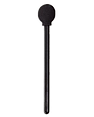
Lollipop Sponge
These have a handle, making them easy to hold and more sanitary since your hands stay further from the client’s face. They’re great for:
-
Faster application at high-volume events.
-
Stenciling & powders.
Cleaning & Caring for Your Brushes
Your brushes are one of the most important tools in your kit, and how you care for them directly affects your linework, petal shapes, paint flow, and overall design quality. A well-loved brush can last a long time, but a neglected one can fray, split, harden, or stop performing the way you need it to. beautiful stroke at a time.
Anatomy of a Brush
Main Parts
-
Handle: The long, wooden shaft that you hold while painting. It provides control and balance.
-
Ferrule: The metal sleeve that securely connects the bristles to the handle and holds them in place.
-
Bristles: The entire bundle of hair or synthetic fibers at the end of the brush that holds and applies the paint.
Detailed Areas of the Bristles
-
Heel: The end of the ferrule where it connects to the handle.
-
Belly: The thickest part of the bristles, which is responsible for holding the paint reservoir.
-
Toe: The very tip of the bristles, used for detailed and fine strokes.
Important: Keep that glue strong! Since the ferrule is glued to the handle, try not to let water creep above the metal casing. If the base stays wet, the adhesive can loosen, and you might find your brush head popping right off.

Why Brush Care Matters
Clean brushes don’t just look nicer — they work better. Proper care helps:
-
Keep your lines crisp and controlled
-
Protect the shape of round, flat, angle, and filbert brushes
-
Prevent paint buildup near the ferrule (the metal part)
-
Reduce bacteria and keep your setup more sanitary
-
Save money by making your brushes last longer
If your brush isn’t doing what it used to do, it may not be “bad” — it may just need better care.
Daily Brush Cleaning Basics
During and after every event, your brushes should be cleaned thoroughly.
During Events
While working, rinse brushes often in clean water to prevent paint from drying deep into the bristles. Avoid letting paint sit in the brush for long periods, especially near the base.
Quick tips during gigs:
-
Swish gently in water, don’t mash the bristles
-
Wipe on a clean towel or paper towel
-
Keep dirty water and clean water separate if possible
-
Don’t leave brushes soaking in water for long periods, leaving brushes sitting in water can loosen the glue, bend the bristles, and damage the handle over time.
How to Properly Wash Brushes
At the end of a shift or practice session, give your brushes a proper wash.
Best Method:
-
Rinse out as much paint as possible with lukewarm to hot water.
-
Use a gentle brush soap, baby shampoo, or mild cleanser.
-
Work soap through the bristles with your fingers.
-
Rinse until the water is clear with running water or in a bottom textured rinse cup.
-
Gently reshape the brush head.
-
Lay flat or angle downward to dry.
Important:
-
Never dry brushes standing upright while wet, water can seep into the ferrule and weaken the glue holding the bristles in pla
-
Never soak the brush above the ferrule
How to Keep Brush Shapes Looking Great
A brush is only as good as its shape. If the tip is bent, split, fluffy, or uneven, it won’t give you the crisp results you want.
To protect the shape:
-
Reshape brushes after every wash
-
Avoid crushing them in your kit
-
Store them in a brush holder, roll, or upright container once fully dry
-
Keep fine detail brushes protected from getting bent
For round brushes especially, a clean pointed tip is everything. For flat and angle brushes, keeping the edges sharp helps with one-strokes, petals, and clean blending.

Common Brush Problems & How to Fix Them
Sometimes brushes just don’t behave, the tip’s all splayed, bristles are fraying, or dried paint is stuck near the base. I’ve definitely been there. Usually, it’s either dried paint trapped near the base, the brush got bent in storage, or it’s been treated a little too roughly.
Here’s what I do to get them back in shape:
-
Wash deeply with brush soap
-
Gently reshape the bristles with my fingers
-
Let them dry flat, keeping that tip in the right shape
If you really want to reshape a stubborn tip, I use hot (almost boiling) water, but only halfway up the ferrule. If water reaches the top, the glue can loosen and bristles fall out. For those stubborn tips, a tiny bit of Arabic gum works wonders. I pour a little in a disposable cup, dip just the tip, and gently work it through from ferrule to tip—like magic, the brush looks almost brand new again.
Bristles Are Fraying or Splitting
This usually happens if you scrub too hard, soak too long, or store them carelessly. Prevention is simple:
-
Be gentle when rinsing
-
Don’t mash the brush into paint or water
-
Store it where it won’t get crushed
Brush Feels Stiff
Most of the time, stiffness is leftover dried paint or soap residue. Fix it by washing thoroughly with warm water and mild soap, then gently work the bristles until they soften.
Sanitation Matters, Too
Brush care isn’t just about performance—it’s also about cleanliness and professionalism. When you’re painting kids or working at public events, clean tools make the experience safer and more trustworthy.
Good sanitation habits include:
-
Washing brushes after every event
-
Using clean water throughout your shift
-
Avoiding double-dipping dirty brushes into clean products
-
Keeping your brush storage container clean
A clean kit doesn’t just look better—it feels better and helps build confidence with parents and clients.
Rotate Your Brushes
If you rely on the same few brushes nonstop, they’ll wear out fast. Having multiples of your most-used brushes keeps your kit running smoothly during busy events. My must-have extras are:
-
Round brushes
-
Flat brushes
-
Angle brushes
-
Petal brushes
-
Detail liners
Your favorite brushes will earn their keep, especially if you take care of them!